Matthew Thorne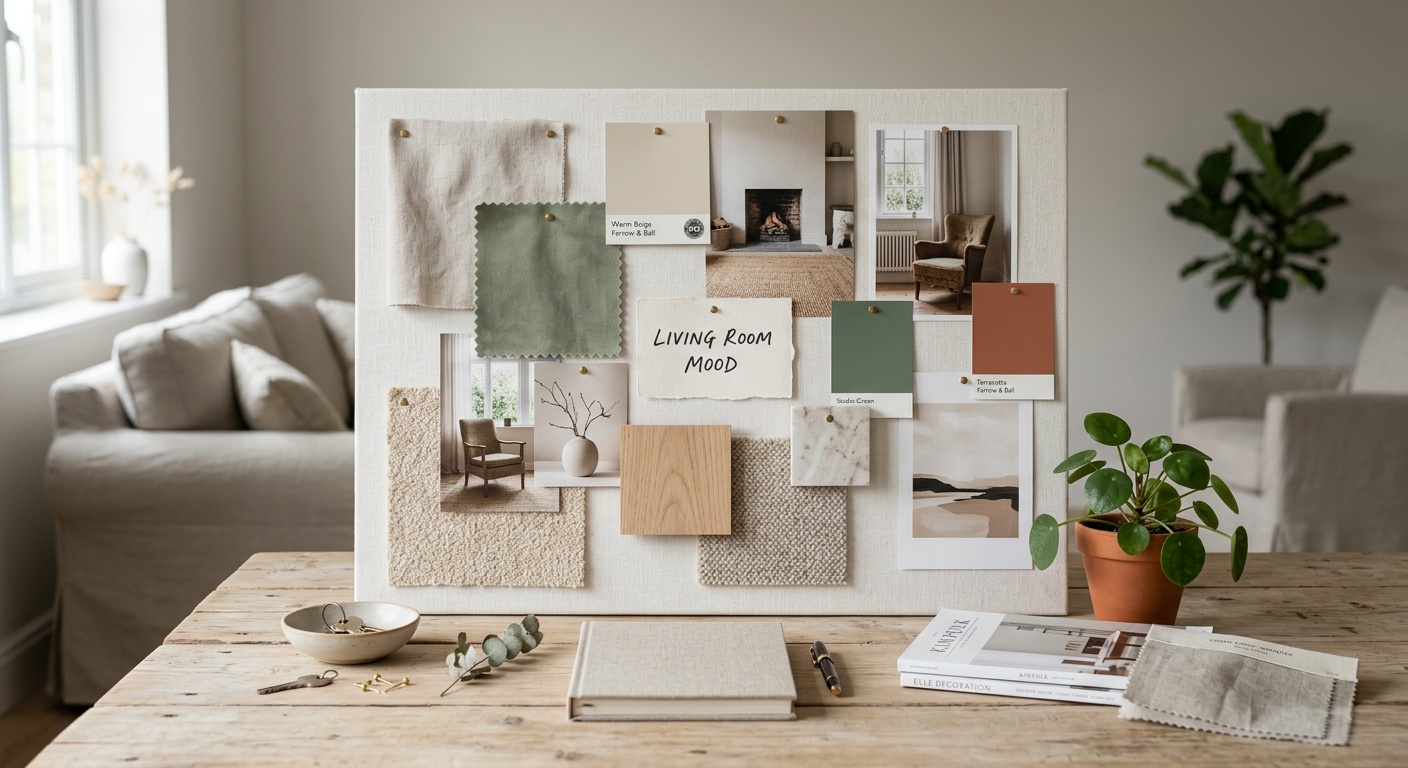
Interior Design Ideas New Homeowners Should Know Before Decorating
Reading time: 12 minutes
Congratulations — you’ve got the keys. Now what? If you’re standing in your new home staring at blank walls and an empty floor plan, feeling equal parts excited and overwhelmed, you’re in very good company. According to a 2025 Houzz New Homeowner Report, 73% of new homeowners start decorating without a defined plan, and more than half end up redoing at least one major design decision within the first year — an expensive lesson that costs an average of $2,400 per room in corrections.
Here’s the straight talk: interior design isn’t about having a Pinterest-perfect vision. It’s about understanding the logic behind beautiful, functional spaces — and applying that logic before you spend a single dollar on furniture or paint.
This guide is your strategic starting point. Whether you’re working with a modest budget or ready to invest seriously in your space, the principles here will save you time, money, and a lot of second-guessing.
Table of Contents
- Understand Your Space Before You Buy Anything
- Find Your Design Style (Without Losing Your Mind)
- Color Theory Fundamentals Every Homeowner Needs
- Furniture Layout: The Rules That Actually Matter
- Lighting — The Most Underestimated Design Element
- Budget Smarter: Where to Splurge and Where to Save
- 3 Common Decorating Mistakes and How to Avoid Them
- FAQs
- Your Design Roadmap: First 90 Days
1. Understand Your Space Before You Buy Anything
The single biggest mistake new homeowners make? Buying furniture before measuring. It sounds almost too obvious to say, but in 2026, with same-day delivery and one-click shopping, it’s easier than ever to impulse-buy a sofa that simply won’t fit through your front door — or worse, one that swallows your living room whole.
Start With a Floor Plan
Before ordering anything, sketch or digitally map your rooms. Free tools like Roomstyler, Planner 5D, and IKEA’s Room Planner (all updated with AI-assisted layout suggestions as of 2025) let you drag and drop furniture to scale. This step alone eliminates the majority of layout regrets.
Key measurements to record for every room:
- Room dimensions (length × width × ceiling height)
- Door and window placements (including swing direction of doors)
- Outlet and switch positions
- Any architectural features — fireplaces, alcoves, built-ins, columns
- Natural light direction (which way does the room face?)
Consider How You Actually Live
Design for your real life, not your ideal life. A stunning formal dining room sounds appealing, but if you eat 90% of your meals at the kitchen island, that space is wasted. Ask yourself practical questions: Do you work from home? Do you have kids or pets? Do you entertain frequently or prefer intimate gatherings?
Case Study — The Martínez Family, Austin, TX (2025): After purchasing a 1,900 sq. ft. home, the Martínezes immediately invested in a formal living room setup — two large sofas, a coffee table, and an area rug — totaling $4,800. Six months in, the room was barely used. Their family life revolved around the open kitchen and a small den. A layout conversation upfront — and mapping how they’d actually spend time — would have redirected that budget toward the spaces that mattered.
2. Find Your Design Style (Without Losing Your Mind)
In 2026, the interior design industry has moved firmly away from rigid “one-style” categorizations. The dominant trend is curated eclecticism — a confident mix of influences that feels personal rather than catalog-perfect. But even within that freedom, knowing your foundational aesthetic prevents your home from feeling chaotic.
Here’s a quick orientation across the five most popular styles new homeowners gravitate toward:
| Style | Key Characteristics | Best For | Budget Range (Living Room) | 2026 Popularity Trend |
|---|---|---|---|---|
| Modern Minimalist | Clean lines, neutral palette, intentional negative space | Small spaces, busy lifestyles | $3,000–$8,000 | ↑ Steady growth |
| Warm Contemporary | Natural textures, earthy tones, curved furniture | Family homes, social spaces | $4,500–$10,000 | ↑↑ Dominant trend |
| Transitional | Blends traditional and modern; timeless, versatile | First homes, broad resale appeal | $3,500–$9,000 | → Stable, safe choice |
| Scandinavian | Functionality, light woods, cozy minimalism (hygge) | Northern climates, compact spaces | $2,500–$6,000 | → Mature but enduring |
| Maximalist Eclectic | Bold colors, layered patterns, curated collections | Confident decorators, unique personalities | $5,000–$15,000+ | ↑ Rising sharply in 2026 |
Pro Tip: Don’t just save photos you love — analyze why you love them. Is it the color palette? The material mix? The sense of light? Patterns in your saved images reveal your true aesthetic more reliably than any online quiz.
3. Color Theory Fundamentals Every Homeowner Needs
Color is the most powerful and most misunderstood tool in interior design. Done well, it makes rooms feel larger, cozier, or more energetic. Done poorly, it creates spaces that feel off — even when you can’t articulate exactly why.
The 60-30-10 Rule
This is the foundational color framework professional designers use, and it works for any style:
- 60% — Your dominant color (walls, large upholstery, flooring)
- 30% — Secondary color (curtains, accent chairs, rugs)
- 10% — Accent color (throw pillows, artwork, decorative objects)
This ratio creates visual balance. Beginners often go wrong by using too many accent colors at equal intensity — the result is a room that feels restless rather than curated.
Understanding Undertones (The Hidden Trap)
Here’s something that catches almost every new homeowner off guard: paint colors have undertones that shift dramatically based on your room’s lighting. A beige that looks warm and creamy in the store can appear pink or green in your home depending on the light source.
Always test paint samples on multiple walls (not just one corner), and observe them at different times of day — morning light, afternoon sun, and evening artificial lighting. In 2026, several paint brands including Benjamin Moore and Sherwin-Williams now offer augmented reality apps that simulate how a color will read under your specific home’s light conditions — a genuinely useful innovation.
2026 Color Trend Spotlight: According to the Color Marketing Group’s 2026 forecast, the palette dominating new homeowner spaces this year centers on warm terracottas, deep sage greens, and dusty mauves — colors that bring natural warmth and psychological grounding. These are replacing the cool grays and greige tones that dominated the 2018–2023 era.
4. Furniture Layout: The Rules That Actually Matter
Furniture arrangement is part geometry, part psychology. The goal is to create spaces that feel both functional and emotionally comfortable — where flow makes sense and conversation happens naturally.
Here are the foundational rules that professional designers apply consistently:
- Define a focal point first. Every room needs one — a fireplace, a window view, a feature wall, or a large piece of artwork. Arrange furniture in relationship to that anchor.
- Leave adequate traffic lanes. Maintain at least 30–36 inches of clearance for major pathways through a room, and 18 inches minimum between a sofa and coffee table.
- Float your furniture. One of the most common new-homeowner mistakes is pushing all furniture against the walls. Floating pieces toward the room’s center creates intimacy and makes rooms feel larger, not smaller.
- Scale matters more than style. A beautiful chair that’s proportionally wrong for your room will always look awkward. Match furniture scale to room scale consistently.
- Area rugs anchor everything. In living rooms, all major furniture legs should either sit fully on the rug, or only the front two legs — never have a rug floating entirely underneath only one piece.
Case Study — A Studio Apartment Transformation, Chicago, 2025: Interior designer Priya Nair shared a project where a client’s 520 sq. ft. studio felt claustrophobic despite minimal furniture. The fix wasn’t removing pieces — it was repositioning them. By floating the sofa 18 inches from the wall, using a large 8×10 rug to define the living zone, and placing the desk perpendicular to the window rather than against a wall, the same furniture suddenly made the room feel 30% larger by perception. No new purchases required.
5. Lighting — The Most Underestimated Design Element
If there’s one area where new homeowners consistently under-invest, it’s lighting. Most newly built or recently renovated homes come with basic overhead lighting that, if used as the only light source, creates a flat, institutional feel regardless of how beautiful your furniture or color choices are.
Designers universally recommend layered lighting — using three distinct types in every main room:
- Ambient lighting — General, room-wide illumination (overhead fixtures, recessed lighting)
- Task lighting — Focused light for specific activities (desk lamps, under-cabinet kitchen lights, reading lamps)
- Accent lighting — Decorative and atmospheric (wall sconces, picture lights, LED strip lighting, candles)
The key is dimmability. In 2026, smart lighting systems integrated with home automation — including products from Philips Hue, Lutron, and newer AI-driven systems from companies like Josh.ai — allow you to set “scenes” that shift lighting throughout the day to support your circadian rhythm and mood. Even if you don’t go fully smart, installing dimmer switches on all overhead lights is a $15–$40 upgrade per switch that dramatically transforms how a room feels after dark.
Warm vs. Cool Bulbs: Color temperature matters enormously. Measure in Kelvins — 2700K–3000K produces warm, golden light ideal for living rooms and bedrooms. 3500K–4000K is neutral white, good for kitchens. 5000K+ is daylight, best for workshops or reading. Mixing temperatures throughout your home creates jarring transitions between spaces.
Lighting Data: Impact on Perceived Room Comfort
Layered Lighting (3 types)
Overhead + 1 Lamp
Overhead Only (dimmable)
Overhead Only (fixed, bright)
Source: American Society of Interior Designers (ASID) Homeowner Comfort Survey, 2025
6. Budget Smarter: Where to Splurge and Where to Save
In 2026, with material costs still elevated from years of supply chain disruption and inflation, strategic budgeting is more important than ever. The good news: you don’t need to spend equally across all categories to achieve a high-quality result.
Interior designers consistently recommend this investment hierarchy:
Where to Spend More
- Sofa and primary seating — You use it daily; cheap upholstery breaks down within 2–3 years. Invest in quality construction and durable fabric.
- Mattress and bed frame — Sleep quality directly impacts health and wellbeing. This is non-negotiable.
- Flooring — Hard to change, highly visible. Quality flooring elevates every other element in the room.
- Window treatments — Cheap curtains immediately signal budget constraints. Well-fitted drapes hung high and wide make rooms look taller and more luxurious.
- Lighting fixtures — Statement fixtures function as sculpture. A $300 pendant in a kitchen or dining room has outsized visual impact.
Where to Save Strategically
- Accent furniture — Side tables, accent chairs, and decorative shelving can be sourced secondhand, from budget retailers, or DIY’d without compromising the overall look.
- Decorative accessories — Vases, throw pillows, candles, and books are highly affordable styling tools that have enormous visual impact per dollar.
- Art — You don’t need expensive original art. Prints from independent artists on platforms like Society6 or Etsy, properly framed, look exceptional. A great frame on affordable art always beats a mediocre frame on expensive art.
- Trend-specific pieces — If you want to incorporate a current trend (a specific color, a shape that’s having a moment), buy it affordably. Trends shift — you’ll want flexibility to update these without regret.
Industry insight from designer Justina Blakeney, 2025: “The rooms that feel most expensive usually aren’t — they’re just cohesive. Cohesion comes from intentionality, not from spending more.”
7. Three Common Decorating Mistakes and How to Avoid Them
Mistake #1: Hanging Art Too High
This is the most universal decorating error. Art should be hung so that the center of the piece sits at approximately 57–60 inches from the floor — eye level for the average person. Most new homeowners hang art at the same height as light switches, which is too high and disconnects the art from the furniture below it. When hanging art above a sofa, leave 6–8 inches of space between the top of the sofa and the bottom of the frame.
Mistake #2: Using Only One Light Source Per Room
Already addressed in the lighting section — but worth naming explicitly as a mistake because it’s so pervasive. If your plan for a bedroom is “overhead light and that’s it,” you’re setting yourself up for a cold, unflattering space. Even two well-placed bedside lamps transform the entire mood of a bedroom.
Mistake #3: Decorating Too Fast
The pressure to have your home “finished” immediately is real — especially when you’ve moved in with boxes everywhere and friends are coming to visit. But rushing leads to expensive decisions you’ll regret. Live in your space for at least 30–60 days before making major purchases. You’ll discover which rooms you actually use, which layouts feel awkward, and which walls beg for a focal piece. Patience is the single most cost-effective decorating strategy.
Frequently Asked Questions
How much should a new homeowner realistically budget for decorating an entire house?
Industry benchmarks in 2026 suggest allocating 10–15% of your home’s purchase price for furnishing and decorating — though this varies enormously by style, city, and how much you’re starting from scratch. For a $350,000 home, that’s $35,000–$52,500 spread across all rooms. However, this doesn’t need to be spent immediately. Many experienced homeowners recommend a phased approach: prioritize the bedroom and kitchen in month one, tackle living areas in months two through six, and let secondary spaces evolve organically over the first year as you understand your needs better.
Is it worth hiring an interior designer as a new homeowner?
For many new homeowners, the answer is yes — particularly for high-stakes decisions like furniture layout, color selection, or kitchen and bathroom renovations. In 2026, the design industry has expanded access significantly: many designers offer e-design packages starting at $300–$800 per room, which provide digital floor plans, mood boards, and shopping lists without in-person visits. Platforms like Decorilla, Havenly, and Modsy-style services give you professional guidance at accessible price points. A good designer typically saves you more than their fee by preventing costly mistakes.
What’s the best first room to decorate in a new home?
Universally, designers recommend starting with your bedroom. Here’s why: your home’s wellbeing starts with your sleep quality and your morning experience. A well-designed, restful bedroom that functions properly creates psychological comfort while you navigate the chaos of the rest of the home being in progress. Prioritize: quality bedding, appropriate window treatments for darkness and privacy, good bedside lighting, and a rug underfoot. Once your bedroom feels like a sanctuary, you have the mental space to approach the rest of the home thoughtfully.
Your Design Roadmap: First 90 Days
Interior design doesn’t happen in a weekend — and the homes that feel most intentional, most personal, and most beautiful are almost never the ones that were rushed into completion. Here’s your practical, phased roadmap for the first 90 days in your new home:
- Days 1–14: Observe and map. Live in the space. Take measurements. Note light patterns. Identify which rooms you actually spend time in versus which ones you thought you would. Download a floor plan app and sketch your layouts digitally.
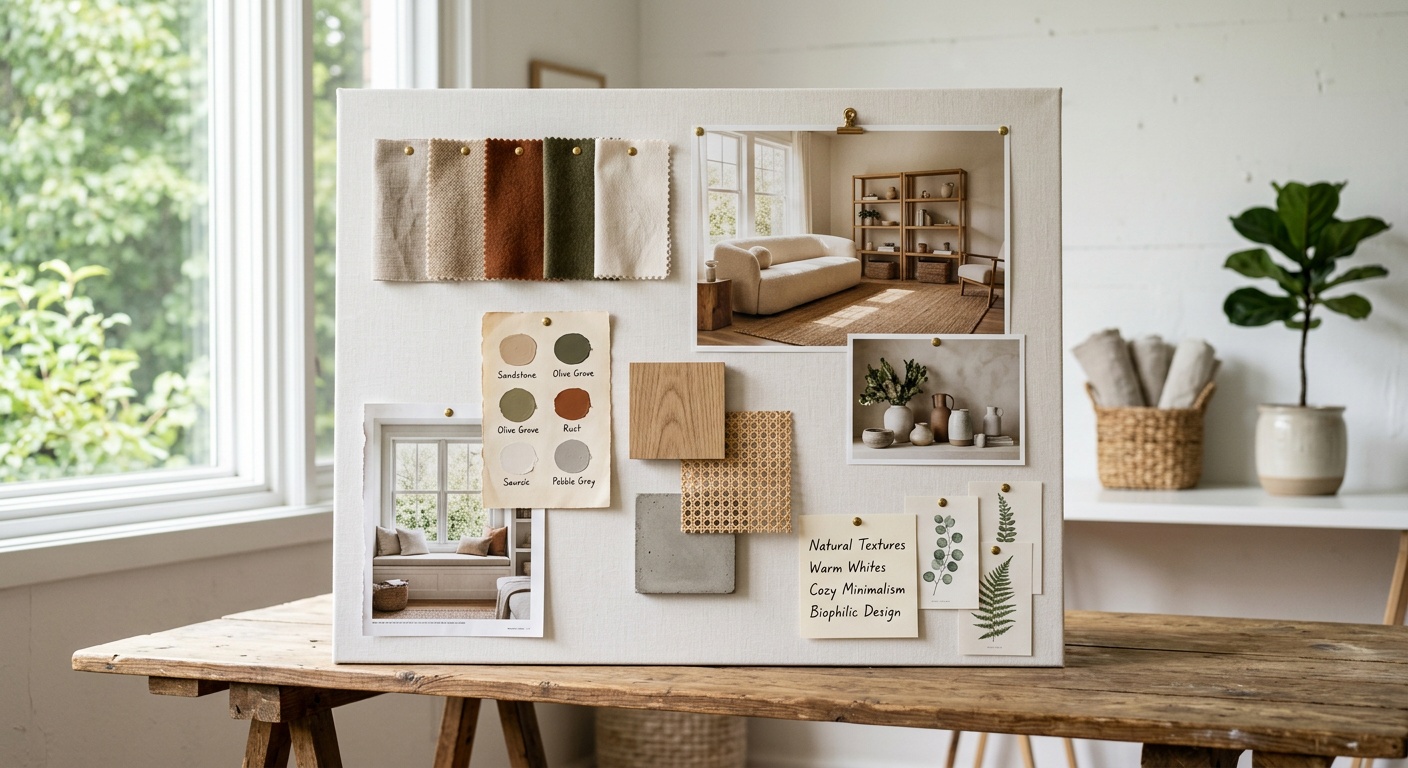
- Days 15–30: Define your style and palette. Curate a mood board (Pinterest, Houzz, or even a physical folder). Identify your 60-30-10 color approach for each main room. Order paint samples and test them on actual walls before committing.
- Days 31–60: Prioritize and purchase intentionally. Start with the bedroom — bed frame, quality mattress, window treatments, bedside lamps. Then address your most-used living area. Buy quality foundational pieces and leave accent shopping for later.
- Days 61–90: Layer and refine. Add rugs, art, plants, and accessories. Adjust what isn’t working. This is the phase where personality enters — and where patience pays the highest dividends.
As AI-powered design tools and augmented reality shopping continue to democratize access to professional-quality interior design in 2026 and beyond, new homeowners have more resources than ever before. But technology is only as useful as the clarity of intention behind it.
Here’s the question worth sitting with: What do you want to feel when you walk through your front door at the end of a long day? Start there. Every design decision — color, light, furniture, layout — flows backward from that answer. Your home is the most personal space you’ll ever create. Give it the thought it deserves, and it will give you back comfort, joy, and a genuine sense of belonging for years to come.