Matthew Thorne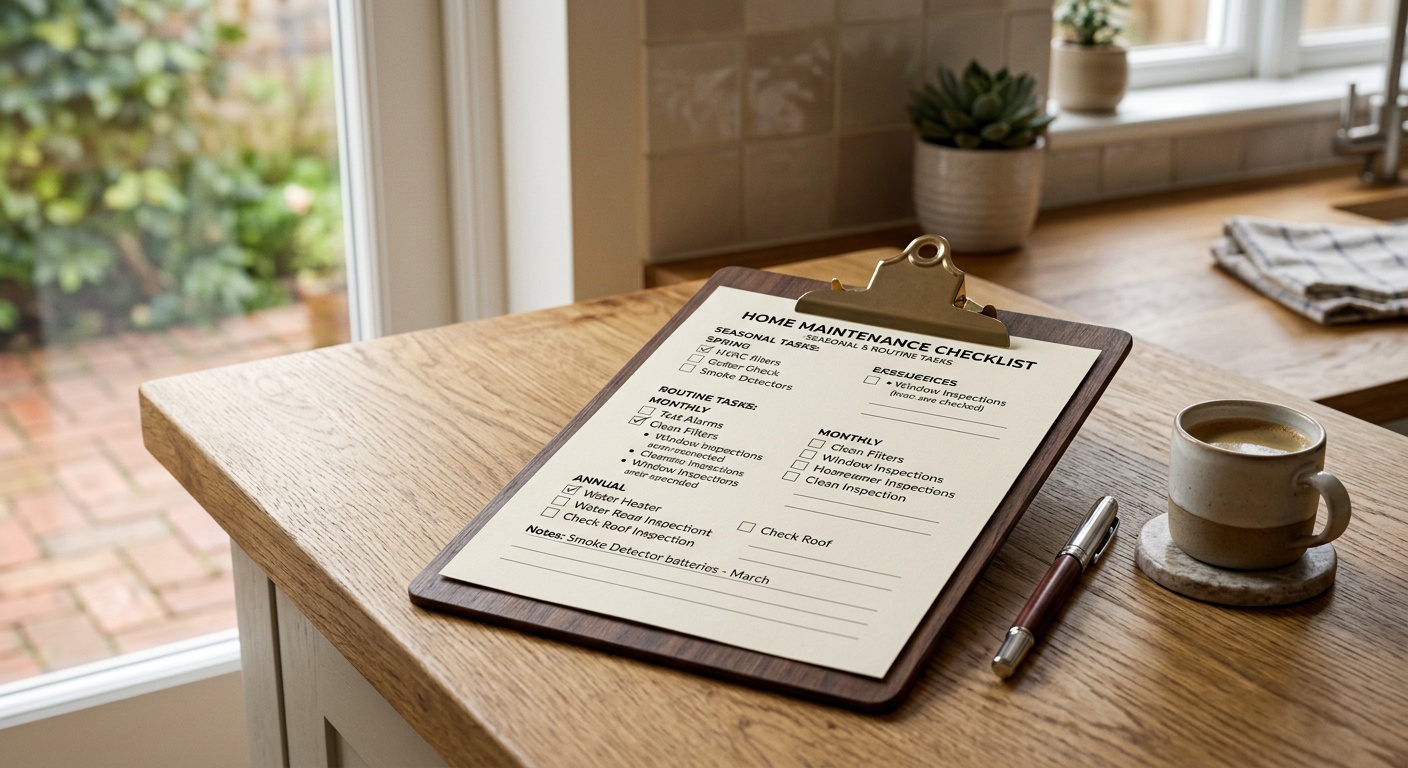
Essential Maintenance Schedule for New Homeowners in Year One
Reading time: 14 minutes
You’ve just signed the papers, collected the keys, and walked through the front door of your very own home. Congratulations — that’s a monumental achievement. But here’s the part nobody puts in the welcome packet: your home is now quietly waiting for you to take care of it, and if you don’t, it will find increasingly expensive ways to remind you.
According to the National Association of Home Builders (NAHB), homeowners who follow a proactive maintenance schedule in their first year of ownership save an average of $3,400 to $5,200 compared to those who adopt a reactive “fix it when it breaks” approach. In 2026, with material and labor costs still elevated from inflationary pressures, that gap is wider than ever.
Well, here’s the straight talk: Your first year as a homeowner isn’t about being perfect — it’s about building the habits and systems that will protect your investment for decades. Think of this guide as your home’s operating manual — the one the previous owner never gave you.
Table of Contents
- Why Year One Sets the Tone for Everything
- The Seasonal Maintenance Framework
- Monthly Tasks You Cannot Skip
- 3 Common First-Year Challenges and How to Beat Them
- Budgeting for Maintenance: Real Numbers for 2026
- Tools, Apps, and Tracking Systems
- Frequently Asked Questions
- Your First-Year Homeowner Roadmap: Next Steps
Why Year One Sets the Tone for Everything
Think of your home like a new car. The first year is when you learn its quirks, establish service rhythms, and catch any issues the previous owner (or builder) left behind. Homes purchased in 2025 and early 2026 often came with deferred maintenance baked in — sellers in a competitive market didn’t always invest in upkeep before listing.
A 2025 HomeAdvisor survey found that 67% of new homeowners discovered at least one significant maintenance issue within the first 90 days of ownership that was not disclosed during inspection. These ranged from clogged gutters and failing HVAC filters to more serious structural concerns like improper grading around foundations.
The good news? Most of these issues are preventable or manageable when you have a schedule. The goal of Year One maintenance isn’t heroics — it’s awareness, rhythm, and timely action.
The Hidden Cost of Doing Nothing
Let’s look at a real-world scenario. Sarah and Marcus bought a 1992-built colonial in suburban Ohio in March 2025. They were so focused on decorating and moving in that they skipped the recommended fall gutter cleaning. By January 2026, ice dams had formed along their roofline, forcing water under shingles and into the attic. The repair bill? $8,700. A professional gutter cleaning would have cost them $175.
That’s the math of deferred maintenance. Small tasks left undone become large repairs. Large repairs become structural damage. The cascade effect is real, and Year One is when you have the greatest opportunity to interrupt it.
What “Maintenance” Actually Covers
New homeowners often conflate maintenance with renovation. They’re not the same. Maintenance is the routine, protective work that preserves your home’s existing condition:
- Preventive maintenance — Tasks done on a schedule to prevent problems (e.g., changing HVAC filters, cleaning dryer vents)
- Corrective maintenance — Fixing something that has started to fail but hasn’t broken completely (e.g., recaulking a window before it leaks)
- Emergency maintenance — Urgent repairs after a failure occurs (e.g., burst pipe, roof leak)
Your Year One goal is to maximize preventive tasks and corrective interventions — and virtually eliminate emergency repairs through vigilance.
The Seasonal Maintenance Framework
The most effective approach to home maintenance is seasonal. Each season brings distinct risks to different systems, and aligning your tasks with the calendar ensures nothing gets overlooked. Here’s your comprehensive breakdown:
Spring (March – May): Recovery and Inspection
Spring is your first opportunity after winter to assess damage and prepare for the warmer months ahead. This is arguably the most important maintenance season in Year One because it’s when deferred issues from the home’s sale become visible.
Key spring tasks include:
- Inspect the roof for missing, cracked, or curling shingles after winter storms
- Clean gutters and downspouts of winter debris; check for sagging sections
- Examine the foundation perimeter for new cracks, settling, or drainage issues
- Test and service your air conditioning system before the first heat wave
- Check exterior caulking around windows and doors — winter freeze-thaw cycles are brutal on sealants
- Inspect the deck or patio for wood rot, loose fasteners, or frost heave damage
- Flush your water heater to remove sediment buildup
- Replace smoke and carbon monoxide detector batteries (do this every spring and fall)
Pro Tip: During your spring roof inspection, look from inside the attic with a flashlight. Water stains on rafters or insulation tell you more than a cursory exterior glance ever will.
Summer (June – August): Exterior Focus and Pest Prevention
Summer maintenance leans heavily on the exterior — protecting your home’s envelope, managing landscaping, and preventing pest infiltration during peak activity months.
- Power wash the exterior siding, driveway, and walkways
- Inspect and treat wood siding or decking with appropriate sealers
- Check window screens for tears; replace damaged screens before mosquito season peaks
- Trim trees and shrubs away from the house — branches touching the roof create pest highways and moisture traps
- Inspect the attic for signs of pest activity (droppings, nesting material)
- Test your sump pump if you have one — pour water into the pit to verify it activates
- Clean dryer vents from the exterior — lint-clogged vents are a leading cause of house fires in the U.S., accounting for approximately 2,900 fires annually per the U.S. Fire Administration’s 2025 data
Fall (September – November): Winterization Is Non-Negotiable
Fall is where most first-year homeowners make their costliest mistakes — simply by not doing anything. This season is about systematically closing down systems that won’t survive winter neglect.
- Clean gutters after leaves have fully fallen (typically mid to late November depending on your region)
- Disconnect and drain outdoor hoses; shut off exterior water bibs from the inside valve
- Service your heating system — replace filters, schedule a professional HVAC tune-up
- Check weatherstripping on all exterior doors; a gap letting in daylight is costing you $200–$400 in annual heating costs
- Reverse ceiling fan direction to clockwise to push warm air down from the ceiling
- Drain and store irrigation systems or hire a professional to blow them out
- Inspect the chimney before lighting the first fire — a professional sweep costs $150–$250 and can prevent a $25,000 chimney fire
- Check attic insulation levels; the 2026 energy code standard recommends R-38 to R-60 for most U.S. climate zones
Winter (December – February): Monitor and Respond
Winter maintenance is less about doing big tasks and more about vigilant monitoring — especially in climates with freezing temperatures.
- Know where your main water shut-off valve is located — in a pipe-bursting emergency, every second counts
- Keep cabinet doors under sinks open during extreme cold snaps to prevent freezing pipes
- Monitor for ice dam formation on the roof edges — address promptly with a roof rake
- Check window condensation regularly — excessive condensation signals humidity imbalance that promotes mold growth
- Test garage door auto-reverse safety feature monthly
- Replace HVAC filter (every 90 days is standard; monthly during heavy heating use)
Monthly Tasks You Cannot Skip
Beyond seasonal work, a set of monthly tasks forms the backbone of your maintenance rhythm. These are quick, low-effort actions that compound into significant protection over a year.
| Monthly Task | Time Required | DIY or Pro? | Estimated Annual Cost if Ignored |
|---|---|---|---|
| Replace HVAC filter | 5 minutes | DIY ($8–$25/filter) | $400–$1,200 (HVAC repair) |
| Test smoke/CO detectors | 3 minutes | DIY (free) | Priceless (life safety) |
| Run water in unused fixtures | 5 minutes | DIY (free) | $200–$600 (P-trap issues) |
| Check under-sink plumbing | 5 minutes | DIY (free) | $800–$3,000 (water damage) |
| Inspect garage door operation | 5 minutes | DIY (free) | $300–$900 (spring/motor failure) |
These five tasks together take under 25 minutes per month. That’s less than one episode of your favorite show — and potentially worth thousands of dollars in avoided repairs.
3 Common First-Year Challenges and How to Beat Them
Challenge 1: The “I’ll Do It Later” Trap
The single most common first-year failure isn’t ignorance — it’s procrastination. Moving in, unpacking, settling into a new neighborhood, and managing work all compete with maintenance for your attention. Before you know it, the fall gutter cleaning is still on the to-do list in February.
The Fix: Treat maintenance appointments like doctor visits — schedule them in your calendar the moment you move in. Many homeowners who successfully maintained their homes in Year One reported using a simple system: they scheduled all 12 monthly checks and all four seasonal deep-dives on New Year’s Day, treating them as non-negotiable calendar blocks.
Apps like Centriq (updated with 2026 AI-powered scheduling features) and HomeZada can automate reminders based on your home’s specific systems and your local climate zone.
Challenge 2: Not Knowing What “Normal” Looks Like
How do you know if a crack in your drywall is settling or structural? Is that stain on your basement floor new or old? First-year homeowners face the challenge of lacking a baseline — they don’t know what their home looked like before, so they can’t identify change.
The Fix: In your first month, conduct a comprehensive photographic inventory of your home. Photograph every room, every mechanical system (furnace, water heater, electrical panel), every wall, and every exterior surface. Store these in a cloud folder organized by room. When something looks different six months later, you’ll have a documented reference point.
This practice also pays dividends with your insurance company. In the event of a claim in 2026 or beyond, having pre-loss documentation can dramatically speed up settlements and increase payout accuracy.
Challenge 3: Budget Shock
Many first-year homeowners exhaust their savings on the down payment and closing costs, leaving little for the maintenance reality that immediately follows. A 2026 Bankrate survey found that 44% of homeowners had to delay at least one important maintenance item in their first year due to budget constraints.
The Fix: Build a tiered maintenance fund. Financial planners in 2026 commonly recommend the 1% Rule (budget 1% of your home’s purchase price annually for maintenance) or the Square Footage Rule ($1 per square foot per year). For a 2,000-square-foot home, that’s $2,000 set aside annually — roughly $167 per month. Start contributions the day you close, even if they’re modest.
Prioritize tasks by consequence: life-safety items (smoke detectors, gas systems, electrical) first; structural integrity (roof, foundation, water intrusion) second; comfort systems (HVAC, insulation) third; cosmetic issues last.
Budgeting for Maintenance: Real Numbers for 2026
Let’s talk actual dollars. With 2026 labor costs averaging 12–18% higher than pre-2022 levels in most U.S. metropolitan areas, understanding realistic cost expectations is more important than ever.
Here’s a data visualization of the most common first-year maintenance expenses, showing approximate average costs for 2026:
Average 2026 First-Year Maintenance Costs (U.S. National Average)
$180–$320
$150–$250
$200–$400
$100–$175
$200–$500
A well-executed Year One maintenance plan — covering all major professional services and DIY supply costs — typically runs between $1,500 and $3,200 for an average single-family home. That figure sounds significant until you compare it to the $12,000–$18,000 average cost of a single major repair event like a roof replacement or foundation waterproofing project.
As home maintenance expert Lou Manfredini, known widely as “Mr. Fix-It,” stated in a 2025 interview: “A home that’s properly maintained doesn’t just save you money — it actively builds equity. Buyers in today’s market are paying premiums for homes with documented maintenance histories.”
Tools, Apps, and Tracking Systems
Organization is the foundation of any successful maintenance plan. The good news is that 2026 offers better digital tools for homeowners than ever before.
Digital Tools Worth Using Right Now
1. Centriq (2026 version) — This app allows you to scan appliance model numbers to automatically pull up maintenance schedules, recall notices, and how-to guides specific to your exact equipment. The 2026 update includes AI-generated predictive failure alerts based on your appliance age and usage patterns.
2. HomeZada — A comprehensive home management platform where you can store your photographic inventory, track maintenance history, manage contractor contacts, and monitor your home’s estimated value over time. Particularly useful for documenting work completed, which matters enormously at resale.
3. Google Calendar or Apple Calendar with recurring events — Don’t underestimate the power of a simple, free solution. Set up monthly, seasonal, and annual recurring events with specific task descriptions in the notes field. This takes 30 minutes to set up and runs automatically for years.
The Physical Toolkit Every New Homeowner Needs
You don’t need to become a contractor. You do need a basic toolkit that lets you handle the most common DIY maintenance tasks:
- 20-foot fiberglass ladder (safe for electrical proximity, unlike aluminum)
- Basic hand tools: hammer, screwdrivers (flathead and Phillips), pliers, adjustable wrench
- Cordless drill/driver combo
- Caulk gun and a selection of interior/exterior caulk
- Moisture meter (approximately $25–$50) — invaluable for detecting hidden water intrusion
- Non-contact voltage tester (approximately $20) — essential for any work near electrical wiring
- Shop vacuum — useful for cleaning HVAC registers, basement floors, and garage spaces
Budget approximately $300–$500 for a solid foundational toolkit if you’re starting from zero. Many experienced homeowners note this is one of the highest-return investments of Year One.
Frequently Asked Questions
How much should I really budget for home maintenance in my first year?
The most widely cited guideline in 2026 is the 1% rule: budget 1% of your home’s purchase price annually for maintenance. On a $350,000 home, that’s $3,500 per year. However, this figure can vary significantly based on home age, condition at purchase, and climate. Homes older than 25 years often require 1.5–2% annually, while newly constructed homes may need only 0.5–0.75% in their first few years. Start saving from day one of ownership and build a dedicated maintenance reserve that isn’t touched for discretionary spending.
What’s the single most important maintenance task in Year One?
If forced to name one, most structural engineers and home inspectors in 2026 would say: water management. This encompasses gutters, downspouts, grading, caulking, and drainage — all systems that direct water away from your foundation and structural envelope. Water is by far the leading cause of home deterioration and repair cost in the U.S. Keeping water out of, off of, and away from your home prevents the cascading failures that define expensive repair scenarios. Every dollar spent on water management returns multiples in avoided damage.
Should I do maintenance tasks myself or always hire professionals?
The honest answer is: both, strategically. In 2026, labor costs make professional services more expensive than ever, so DIY has genuine financial value for tasks within a homeowner’s skill set. Routine tasks like changing filters, testing detectors, cleaning gutters, and recaulking windows are well within most homeowners’ abilities with basic instruction. However, anything involving electrical panels, gas lines, structural components, or roofing on pitched roofs should typically involve licensed professionals. The liability and safety risks of DIY errors on these systems far outweigh the cost savings. When in doubt, get a professional assessment first — many offer free or low-cost consultations.
Your First-Year Homeowner Roadmap: Next Steps
You now have the framework. The difference between homeowners who thrive and those who get buried in repair bills isn’t knowledge — it’s execution. Here’s exactly what to do starting today:
- This week: Locate and photograph your home’s main shutoffs — water, gas, and electrical panel. Store photos in a cloud folder labeled “Home Emergency.” Share the location with every adult in your household.
- This month: Conduct your full photographic inventory. Walk every room, every system, every exterior surface with your phone camera. This 90-minute investment will pay dividends for years.
- This season: Execute your current seasonal checklist (refer to the appropriate season above). Don’t try to do everything at once — work through the list over 2–3 weekends.
- By month three: Open a dedicated savings account for home maintenance. Set up an automatic monthly transfer of at least $150–$200. Name the account something specific: “Home Reserve Fund.” This psychological ownership matters.
- By month six: Schedule a professional HVAC tune-up and a plumbing inspection if not already done. Getting professional eyes on your home’s core systems early in your ownership creates a baseline and surfaces issues while they’re still manageable.
In 2026, as home values remain a cornerstone of household financial security, the homeowners who win long-term are those who treat their property as the living, breathing, aging asset that it is. A well-maintained home doesn’t just preserve value — studies consistently show it outperforms the broader market at resale, often by 5–12% compared to comparable but neglected properties.
Here’s the question worth sitting with: Ten years from now, when you’re ready to sell or refinance, what story will your home’s maintenance history tell? Start writing that story today — one task, one season, one well-kept system at a time. Your future self — and your future bank account — will thank you for it.