Matthew Thorne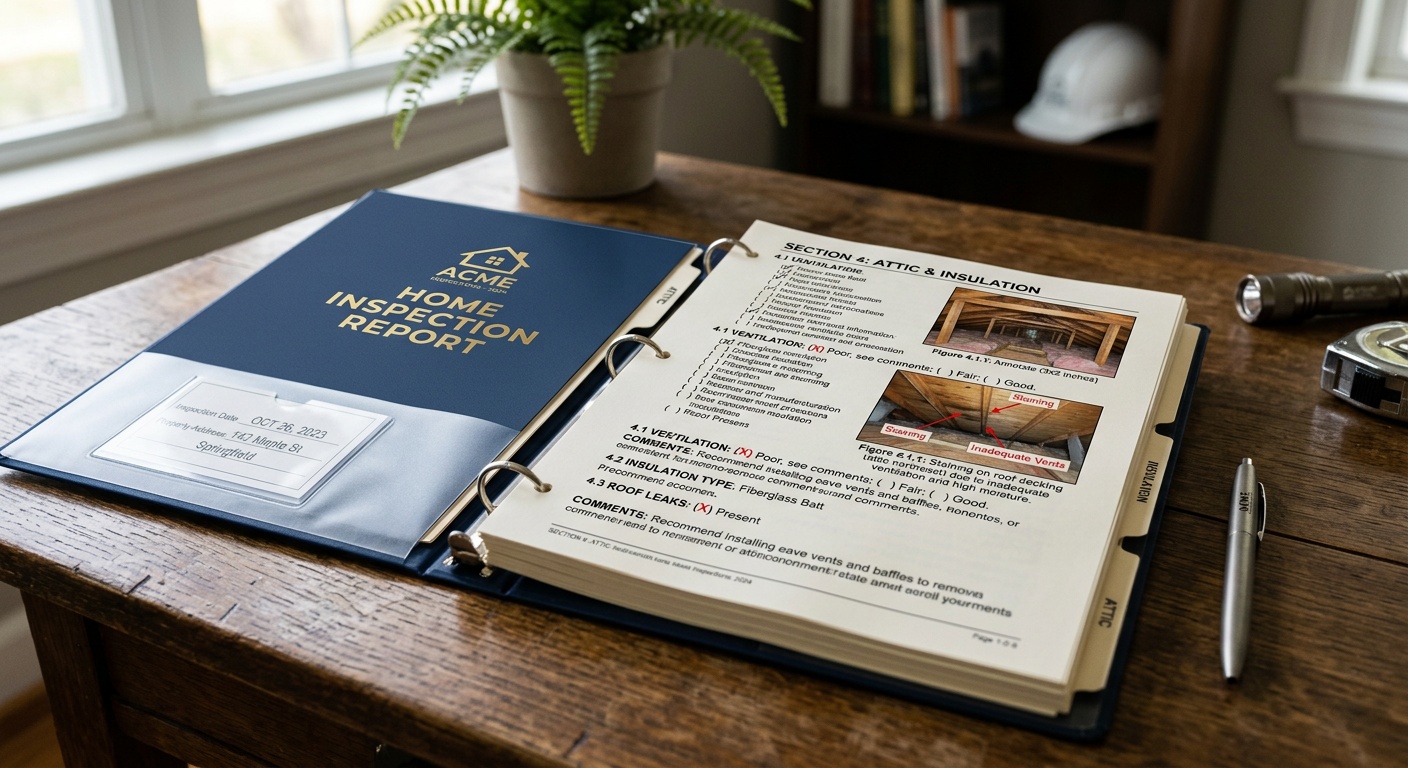
How to Read a Home Inspection Report as a First-Time Buyer
Reading time: 14 minutes
You’ve found the home of your dreams, made an offer, and now you’re holding a 40-page inspection report filled with technical jargon, photos of crawl spaces, and a list of issues that makes your stomach drop. Sound familiar?
Here’s the straight talk: a home inspection report is not a verdict—it’s a roadmap. Most first-time buyers in 2026 either panic at the sight of a long defect list or, worse, dismiss the report entirely because they don’t know how to interpret it. Both mistakes can cost you tens of thousands of dollars.
In 2025, the American Society of Home Inspectors (ASHI) reported that the average home inspection uncovers between 20 and 50 individual items, but fewer than 10% of those typically represent serious structural or safety concerns. Learning to tell the difference is the skill that separates savvy buyers from costly ones.
This guide is your practical decoder ring for understanding exactly what inspectors are telling you—and, more importantly, what you should do about it.
Table of Contents
- What Is a Home Inspection Report?
- Anatomy of a Typical Report
- Understanding Issue Severity Levels
- Red Flags vs. Minor Defects: Know the Difference
- Most Common Inspection Findings in 2026
- How to Use the Report in Negotiations
- Common Challenges First-Time Buyers Face
- Real-World Scenarios: What Would You Do?
- Inspection Issue Comparison Table
- Frequently Asked Questions
- Your Buyer’s Action Plan: Turning the Report Into Your Advantage
What Is a Home Inspection Report?
A home inspection report is a written document prepared by a licensed inspector after a thorough visual examination of a property’s physical structure and major systems. It covers everything from the roof to the foundation, including electrical panels, plumbing, HVAC systems, insulation, windows, and more.
The report is not a pass/fail grade for the house. It’s a detailed snapshot of the property’s current condition at a specific point in time. According to the National Association of Realtors (NAR) 2025 Home Buyer Profile, 88% of buyers who used a buyer’s agent in 2025 had a home inspection performed—and those who understood the report were statistically more satisfied with their purchase 12 months later.
Who Writes the Report and What Are They Looking For?
Home inspectors are trained professionals certified by organizations like ASHI or InterNACHI. In most U.S. states in 2026, inspectors must carry licensing, errors and omissions insurance, and follow standardized reporting practices. They conduct a non-invasive visual examination—meaning they don’t open walls, move furniture, or operate systems that are already off.
The inspector is looking for three primary categories of concern:
- Safety hazards — issues that pose immediate risk to occupants
- Major defects — significant problems that affect the home’s value or livability
- Maintenance items — routine repairs or upkeep that any homeowner should address
Understanding these categories is your first step toward reading the report with confidence rather than anxiety.
Anatomy of a Typical Report
Modern inspection reports in 2026 are usually delivered digitally, often through platforms like HomeGauge, Spectora, or Horizon. They’re visually rich, with embedded photographs, color-coded icons, and narrative descriptions. Here’s what you’ll typically find inside:
The Core Sections of Every Inspection Report
Think of the report as having five major zones, each representing a critical area of the property:
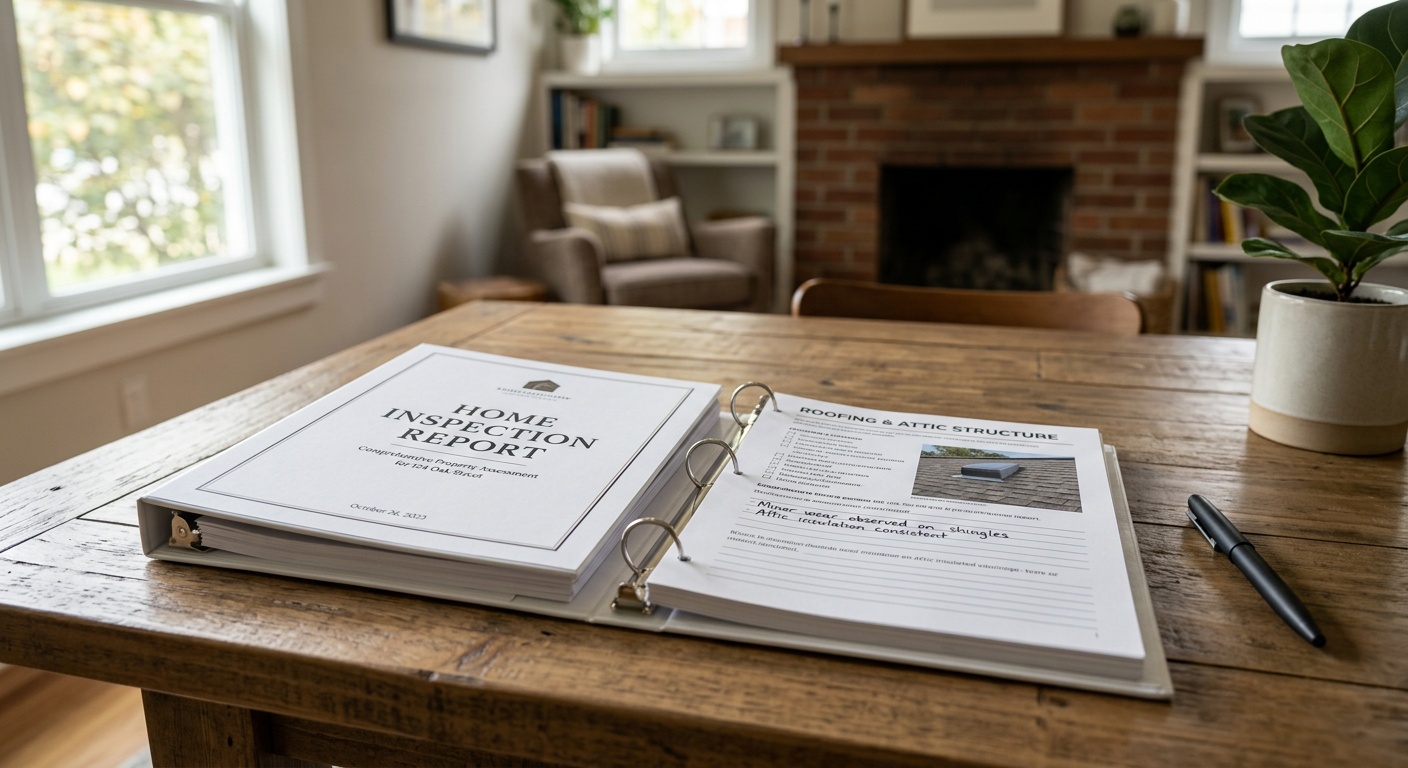
- Cover Page & Summary: Includes the inspector’s information, property address, date of inspection, and weather conditions. Many reports include an executive summary at the front—this is the inspector’s “highlight reel” of concerns. Start here, but don’t stop here.
- Structural Components: Foundation, framing, floors, walls, ceilings, and roof structure. This section tells you about the bones of the house.
- Exterior: Siding, windows, doors, decks, driveways, grading, and drainage. Issues here often relate to water intrusion—one of the most common and costly problems.
- Interior Systems: Electrical, plumbing, HVAC (heating, ventilation, air conditioning), and insulation. These are the home’s major operating systems and can be expensive to repair or replace.
- Interior Spaces: Rooms, closets, attic, basement, and crawl spaces. Inspector notes on moisture, ventilation, pest activity, and insulation conditions live here.
Each section will contain individual items flagged with some type of status designation. Learning that designation system is the key skill you need.
Understanding Issue Severity Levels
Different inspection companies use different labeling systems, but most follow a three-to-four tier model. Here’s the most common framework used in 2026 by InterNACHI-certified inspectors:
- Safety Issue / Immediate Action Required: This item poses a risk to health or safety. Examples include exposed electrical wiring, gas leaks, carbon monoxide risks, or structural instability. These must be addressed before or immediately after closing.
- Major Defect: Significant problem that affects the home’s functionality or value. A failing HVAC system, a cracked foundation wall, or active roof leaks fall here. These items require significant repair or replacement.
- Minor Defect / Repair Recommended: Items that need attention but aren’t urgent. A dripping faucet, missing caulk around a tub, or a loose door handle are typical examples.
- Monitor / Maintenance Item: These are notes for your ongoing awareness as a homeowner. “Caulk around the base of the toilet is aging” is not an emergency—it’s just good homeownership information.
Pro Tip: When you first receive your report, go through and simply count the red and orange items. If you have under five of each, you’re likely looking at a fairly typical home. If you have a dozen red-flag items, it’s time for a very serious conversation with your agent.
Red Flags vs. Minor Defects: Know the Difference
This is where first-time buyers get tripped up most often. A 35-page report with 60 items sounds terrifying—until you realize 52 of those are routine maintenance observations like “paint peeling on garage trim” or “GFCIs need testing in bathroom.”
Genuine Red Flags That Should Give You Pause
These are the issues that warrant specialized inspections, contractor estimates, or serious negotiation leverage:
- Foundation cracks or movement: Horizontal cracks in basement walls, bowing, or evidence of settling beyond minor cosmetic cracking are serious. A structural engineer’s evaluation typically costs $300–$700 in 2026 and is worth every penny.
- Active roof leaks or end-of-life roofing: A new roof in 2026 averages $9,000–$22,000 depending on material and home size, according to Angi’s 2025 Cost Guide. Knowing you’re 2 years from needing one is critical budget information.
- Electrical panel issues: Federal Pacific Stab-Lok panels and Zinsco panels remain flagged by inspectors in 2026 as fire hazards. If your target home has one, budget $2,500–$5,000 for a panel replacement.
- Plumbing with polybutylene pipes: While largely replaced through the 1990s and 2000s, older homes occasionally still have poly-B piping, which is prone to failure. A full re-pipe can run $4,000–$15,000.
- Evidence of moisture intrusion or mold: Water stains in basements, attics showing dark streaking, or musty odors observed during inspection are triggers for specialized mold testing.
- Knob-and-tube wiring: Found in homes built before 1950, this wiring is often uninsurable at standard rates and needs updating.
Things That Look Scary But Usually Aren’t
Equally important is knowing what not to panic about:
- Minor hairline cracks in drywall (common with seasonal temperature changes)
- Loose outlet covers or missing switch plates
- Older but functional water heaters with remaining service life
- Single missing roof shingles (cosmetic, inexpensive fix)
- Stiff windows or doors (common with wood framing, often a minor adjustment)
Most Common Inspection Findings in 2026
Based on aggregated data from InterNACHI’s 2025 inspection database covering over 400,000 home inspections in North America, here are the most frequently cited findings and the percentage of inspections in which they appear:
Most Common Inspection Findings (% of inspections)
86%
74%
67%
55%
43%
Source: InterNACHI Aggregated Inspection Data, 2025 | n = 400,000+ inspections
What this data tells us is striking: improper grading and drainage appears in nearly 9 out of 10 inspections. Yet this issue—where the soil around the foundation slopes toward rather than away from the home—often costs under $500 to correct with basic landscaping. Context is everything.
How to Use the Report in Negotiations
Here’s where your inspection report transforms from a stress document into leverage. In 2026’s real estate market, where housing inventory in many metros remains below historical averages, buyers need to be strategic about what they request from sellers.
Your options after receiving the report typically include:
- Request repairs before closing: Best for safety items and major defects. Insist on licensed contractors and ask for receipts/permits.
- Request a price reduction: Often cleaner than repair requests. If the roof needs $14,000 of work, ask for a $12,000–$14,000 price reduction and handle it yourself with your chosen contractor.
- Request seller credits at closing: Reduces your cash-to-close and gives you flexibility to manage repairs post-purchase. This has become the preferred approach in competitive 2026 markets.
- Walk away: If the inspection reveals fundamental problems (active structural failure, pervasive mold, environmental hazards) that the seller won’t address, your inspection contingency allows you to exit without losing your earnest money deposit.
Expert Insight: “In a balanced market, buyers shouldn’t hesitate to negotiate on items totaling over $3,000 in repairs. Focus your requests on safety items and major systems first—sellers respond better to data-backed, contractor-quoted requests than to a long laundry list of minor complaints.” — Jennifer Walsh, Certified Residential Real Estate Specialist, 2025 NAR Conference keynote.
Pro Tip: Prioritize your negotiation list. Pick the top 3–5 items that matter most rather than submitting 30 repair requests. Sellers perceive long lists as aggressive, and you risk souring the deal over $200 worth of minor fixes.
Common Challenges First-Time Buyers Face
Challenge 1: Report Paralysis — Too Much Information, Not Enough Context
The most common emotional trap: you receive a detailed 45-page report and feel overwhelmed. Every item feels catastrophic. You start Googling “knob and tube wiring fire risk” at 11 PM and convince yourself the house is a death trap.
The fix: Attend the inspection in person (always do this) and ask your inspector to verbally walk you through the top three things they’d address first. Good inspectors are teachers. They’ll give you real-world context that the written report can’t always convey. After that conversation, most buyers feel significantly more confident.
Challenge 2: Confusing Cosmetic Issues With Structural Ones
A cracked ceiling in a bedroom might be a hairline stress fracture from normal settling—or it might indicate a failing beam. A stain on the basement floor might be old water from a past incident that’s been resolved—or it might be active moisture intrusion.
The fix: When the report flags something ambiguous, ask your inspector directly: “Is this cosmetic or structural?” If they recommend a specialist, listen. Spending $300 on a structural engineer or $200 on a plumbing specialist inspection is infinitely cheaper than buying a problem you didn’t fully understand.
Challenge 3: Treating Every Home as Perfect Until the Inspection
First-time buyers often fall emotionally in love with a home before the inspection, then feel devastated when issues arise. This emotional investment clouds judgment and makes it harder to negotiate clearly.
The fix: Go into every offer knowing that every home will have an inspection report with issues. No home is perfect. The question is never “is there anything wrong?” It’s “are these findings within the range of normal, and can I manage them?” Setting this expectation before you even open the report changes everything.
Real-World Scenarios: What Would You Do?
Scenario A: The “Perfect” Victorian With a Surprise
Marcus and Diane, first-time buyers in Portland in early 2026, fell in love with a 1912 Victorian home listed at $545,000. The home had been beautifully renovated—hardwood floors, updated kitchen, new paint throughout. The inspection report came back with 42 items. Most were minor. But buried on page 28 was a note: “Knob-and-tube wiring observed in attic and partial basement. Recommend evaluation by licensed electrician. This wiring type may be uninsurable or may require full replacement per insurer.”
They got an electrical contractor quote: $18,500 to rewire the affected portions. Their homeowner’s insurance quote came back $340/month higher than standard due to the wiring. Armed with this data, they submitted a price reduction request of $16,000. The seller, motivated and aware of the issue, accepted $14,000 off. Marcus and Diane closed successfully and had the wiring replaced within 60 days of purchase.
Lesson: A buried item in the report cost them nothing because they read carefully and acted strategically.
Scenario B: The “Minor Issue” That Wasn’t
Priya, a single first-time buyer in suburban Atlanta, was under contract on a 2001 colonial. Her inspector noted “efflorescence observed on lower basement wall — monitor for moisture.” Priya didn’t recognize the term and didn’t ask about it. Her agent told her it was “pretty common.” She closed without addressing it.
Eight months later, following a heavy spring rain season, Priya had standing water in her basement. A waterproofing contractor quoted $11,000 for interior drainage installation. Efflorescence—that white mineral deposit—was a direct signal of chronic water infiltration through the foundation wall.
Lesson: Never skip over unfamiliar terms. A 30-second Google search or a quick question to your inspector would have changed Priya’s financial outcome significantly.
Inspection Issue Comparison Table
| Issue Type | Severity | Avg. Repair Cost (2026) | Negotiate or DIY? | Walk Away Trigger? |
|---|---|---|---|---|
| Foundation cracks (structural) | Critical | $5,000–$40,000+ | Negotiate hard / Credit | Possibly yes |
| Roof replacement needed | Major | $9,000–$22,000 | Price reduction | Rarely |
| HVAC system at end of life | Major | $4,500–$12,000 | Seller credit | No |
| Missing GFCI outlets | Minor | $150–$400 | DIY or local electrician | No |
| Improper grading/drainage | Minor–Moderate | $300–$2,500 | DIY or landscaper | No |
Frequently Asked Questions
Is it normal to feel overwhelmed by a home inspection report?
Absolutely—and you’re in good company. The average home inspection report in 2026 contains between 20 and 60 individual observations. The key is to remember that most items are routine maintenance notes, not catastrophic defects. Attend the inspection, ask your inspector to prioritize their concerns verbally, and then read the written report with that context already in hand. If you still feel uncertain, many inspectors offer a 15–30 minute phone consultation after delivery. Use it.
Can I negotiate repairs after the inspection contingency period expires?
In most standard real estate contracts used across U.S. markets in 2026, your inspection contingency has a defined window—typically 7 to 14 days from the inspection date. Once that contingency expires or you remove it in writing, you lose the formal right to exit the contract based on inspection findings, though informal negotiations can sometimes still occur if both parties are cooperative. Always know your contract deadlines and communicate through your agent in writing before that window closes.
Should I always walk away if the inspector finds mold?
Not necessarily. The word “mold” triggers alarm for many buyers, but context is critical. A small area of surface mold on bathroom caulk is a completely different situation from pervasive black mold in an attic or crawl space caused by long-term moisture intrusion. If your inspector notes suspected mold, request a professional mold remediation assessment—these typically cost $300–$600 in 2026. The remediation report will tell you the type, extent, and cost to resolve. Minor mold issues resolved with proper treatment and ventilation corrections are manageable. Extensive, widespread mold tied to unresolved structural water problems is a legitimate walk-away scenario.
Your Buyer’s Action Plan: Turning the Report Into Your Advantage
In an era where housing affordability remains a defining challenge of 2026—with median U.S. home prices sitting near $435,000 according to NAR’s Q1 2026 data—every dollar of informed negotiation matters more than ever. The home inspection report isn’t a hurdle. It’s one of the most powerful financial tools you’ll receive in the entire home-buying process.
Here’s your clear, step-by-step action plan for the moment that PDF lands in your inbox:
- Attend the inspection in person. Every time. No exceptions. The verbal context an inspector gives you on-site is irreplaceable.
- Read the summary first, then the full report. Flag every red and orange item. Count them. Then read the full narrative for each one to understand scope.
- Make a vocabulary list. Any term you don’t understand gets Googled or sent directly to your inspector. Never skip over unfamiliar language.
- Get contractor quotes for anything over $1,500. Don’t negotiate blind. Call two licensed contractors for estimates on major items before submitting your repair request.
- Prioritize your negotiation asks. Choose the top 3–5 items by financial impact. Request seller credits where possible over actual repairs—you’ll have more control over quality and timing post-closing.
As AI-assisted home inspection tools and drone-based roof analysis become increasingly common heading into 2027, reports are only going to become more detailed—not less. Building the skill to read them now sets you up not just for this purchase, but for every real estate decision you make in the years ahead.
Here’s a question worth sitting with: What would it cost you—in money, in stress, in regret—to close on a home you didn’t fully understand? The answer is exactly why the 40 minutes you spend reading your inspection report carefully is one of the best investments you’ll ever make.
You’ve got this. Read the report. Ask the questions. Negotiate with confidence.